
This post may contain affiliate links. For more information, read my disclosure policy.
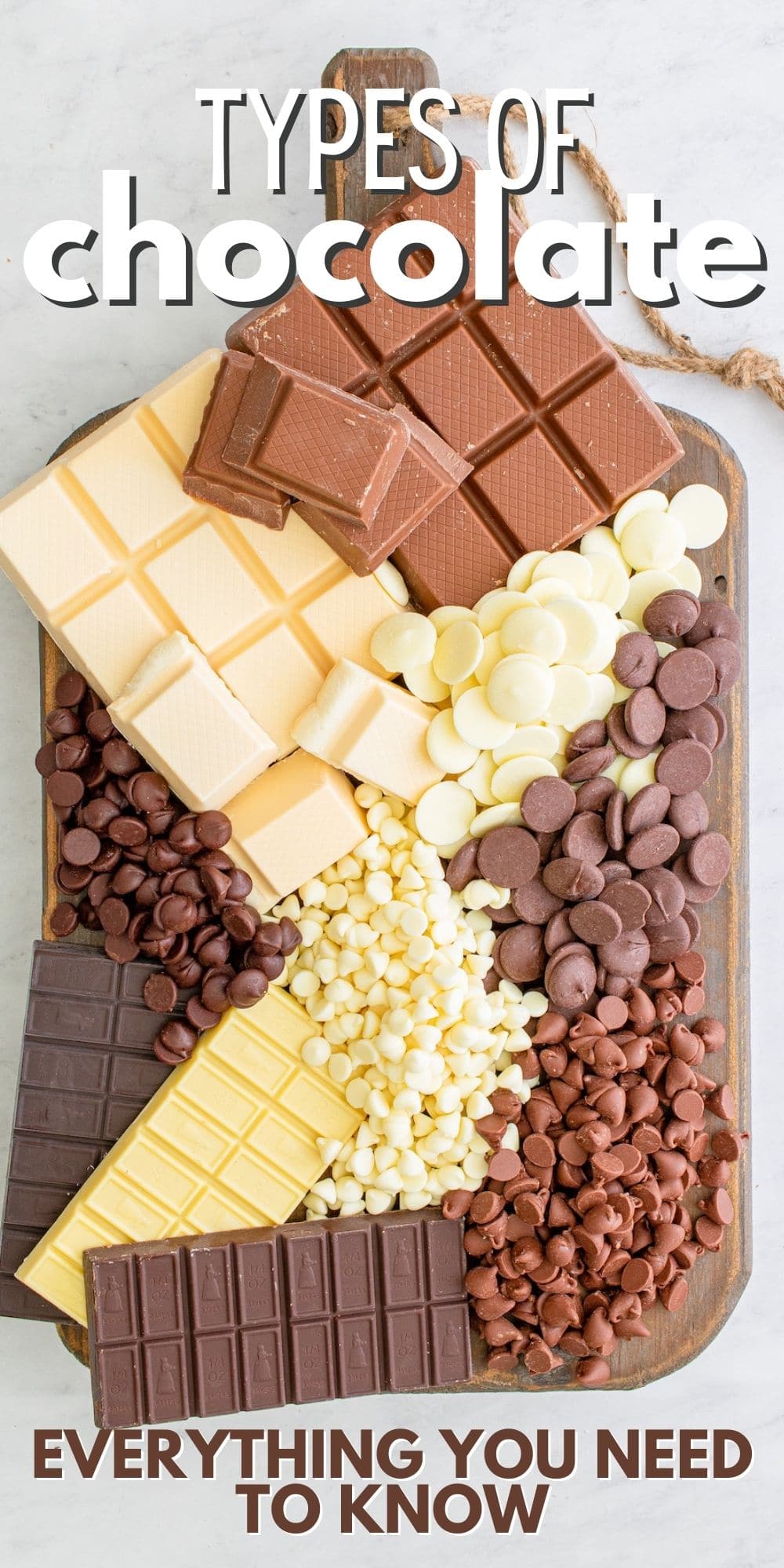
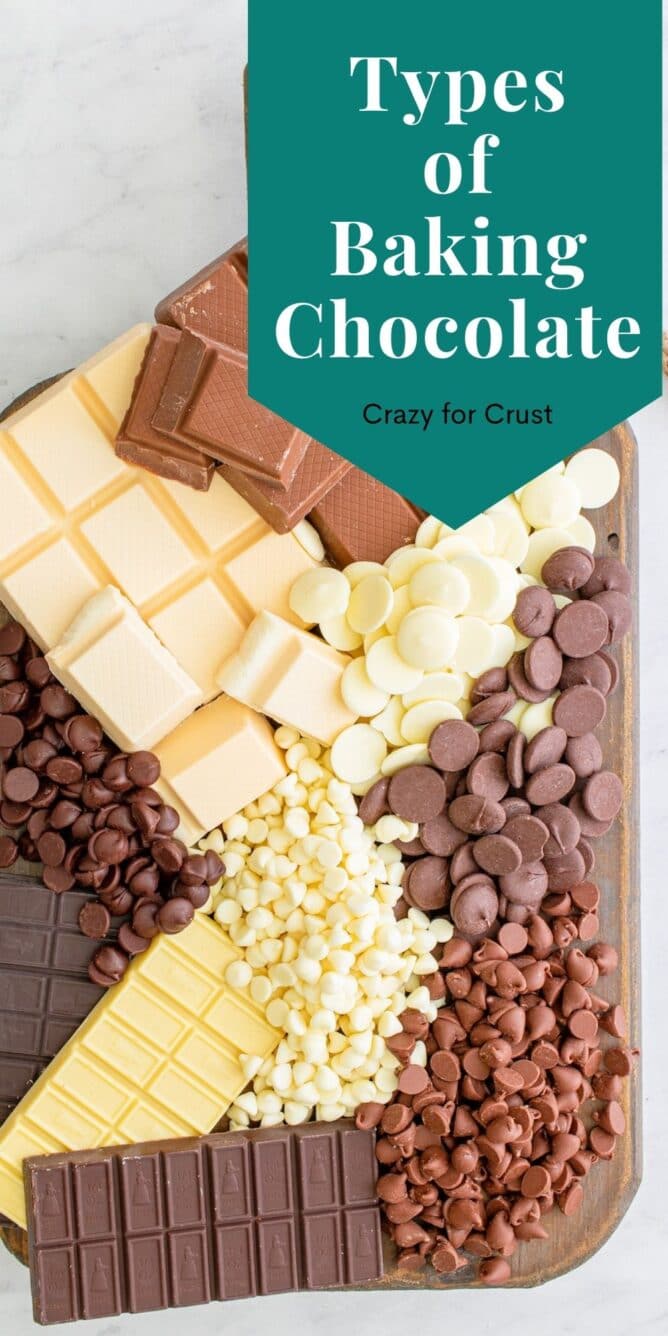
Understanding the different types of chocolate for baking is the secret to moving from a home baker to a pro. Whether you are melting chocolate for a silky ganache or looking for the perfect chip for your cookies, choosing the right percentage of cacao and the correct format makes all the difference. This guide breaks down everything from unsweetened baking bars to the science of why some chocolates melt and others hold their shape!
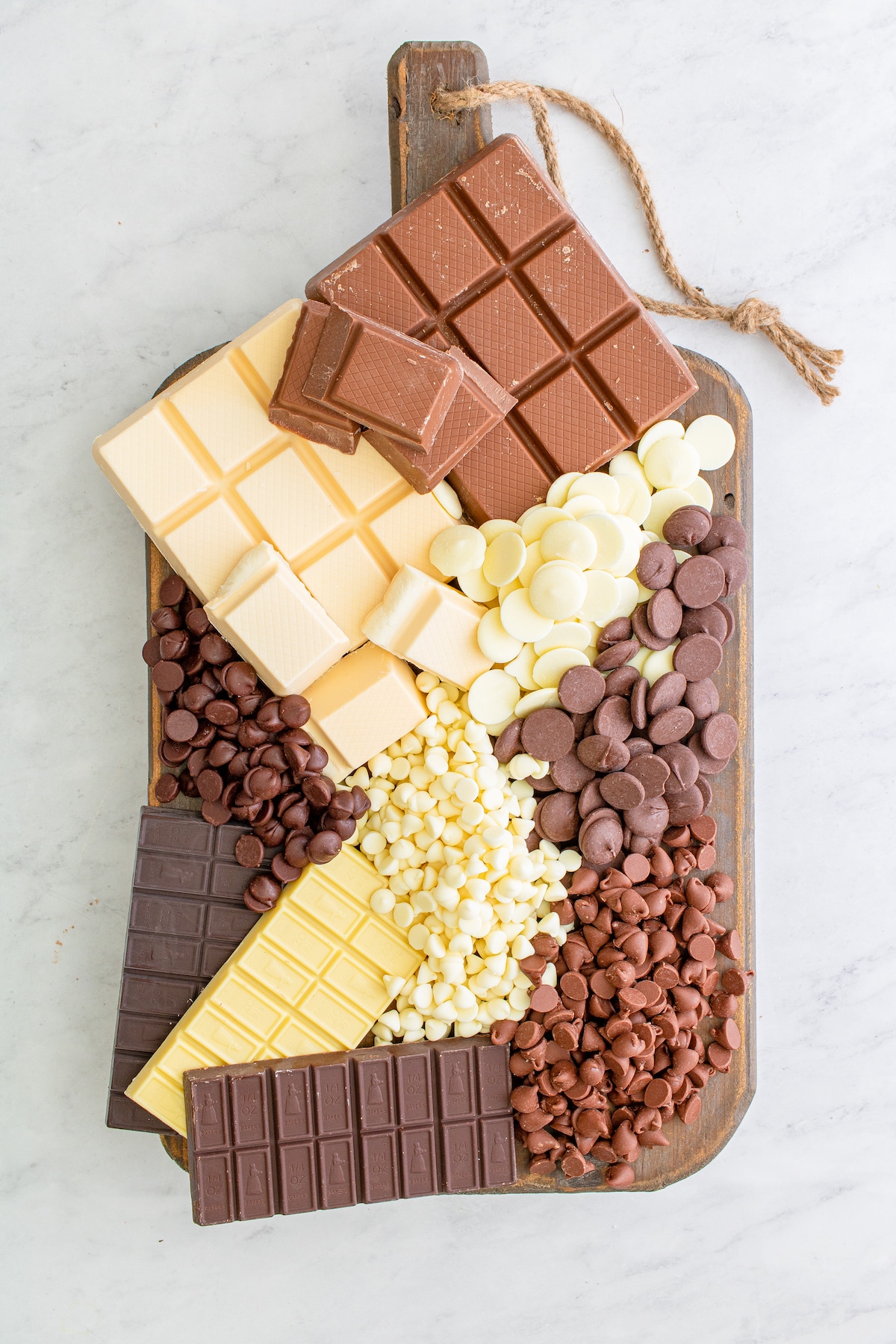
Table of Contents
The most important thing to know is that not all chocolate is created equal. Baking chocolate is specifically formulated for stability and flavor depth in high heat, whereas eating chocolate contains extra sugars and milk solids that can burn or become grainy when baked. In this guide, we’ll explore the six major types of chocolate you need in your pantry and exactly when to use each one for the best results in your kitchen.
What are the best types of chocolate for baking? Use unsweetened chocolate for brownies where you want to control sweetness. Choose bittersweet (60-70% cacao) for rich ganaches and cakes, and semi-sweet for classic cookies. Avoid using chocolate chips for melting; they contain stabilizers designed to hold their shape. For the smoothest melt, use baking bars or couverture chocolate.
The 6 Main Types of Chocolate for Baking
There are so many different types of chocolate for baking: baking bars, chocolate chips, melting chocolate. This post is going to talk about what they all are and what they’re good for.
Flavors of chocolate are all about percentage: the percentage of cacao vs sugar and how much milk solids there are.
- Unsweetened Chocolate which is 100% cacao and no sugar. You don’t want to eat it plain! This chocolate is has a darker color than all the others.
- Bittersweet Chocolate, which is around 70% cacao and 30% sugar (also called dark chocolate). Dark chocolate should never be heated above 133°F to prevent scorching.
- Semisweet Chocolate has around 60% cacao and 40% sugar and is also called dark chocolate.
- Milk Chocolate has under 40% cacao but also contains milk fats and sometimes vanilla. Milk chocolate should never be heated above 115°F to prevent scorching.
- White Chocolate has no cacao at all and often isn’t considered “real” chocolate! White chocolate should never be heated above 115°F to prevent scorching.
- Blonde Chocolate is white chocolate that has been cooked at a low temperature to caramelize the sugars and milk (like when you brown butter). It’s a light beige in color and has a deeper flavor.
- Ruby Chocolate is the newest type of chocolate. It’s made from ruby cocoa beans grown in Ecuador and has a pale pink hue. It’s said to have a sweet, fruity taste with sour notes. It’s about 47% cacao and 26% milk.
Baking Bars vs Chocolate Chips
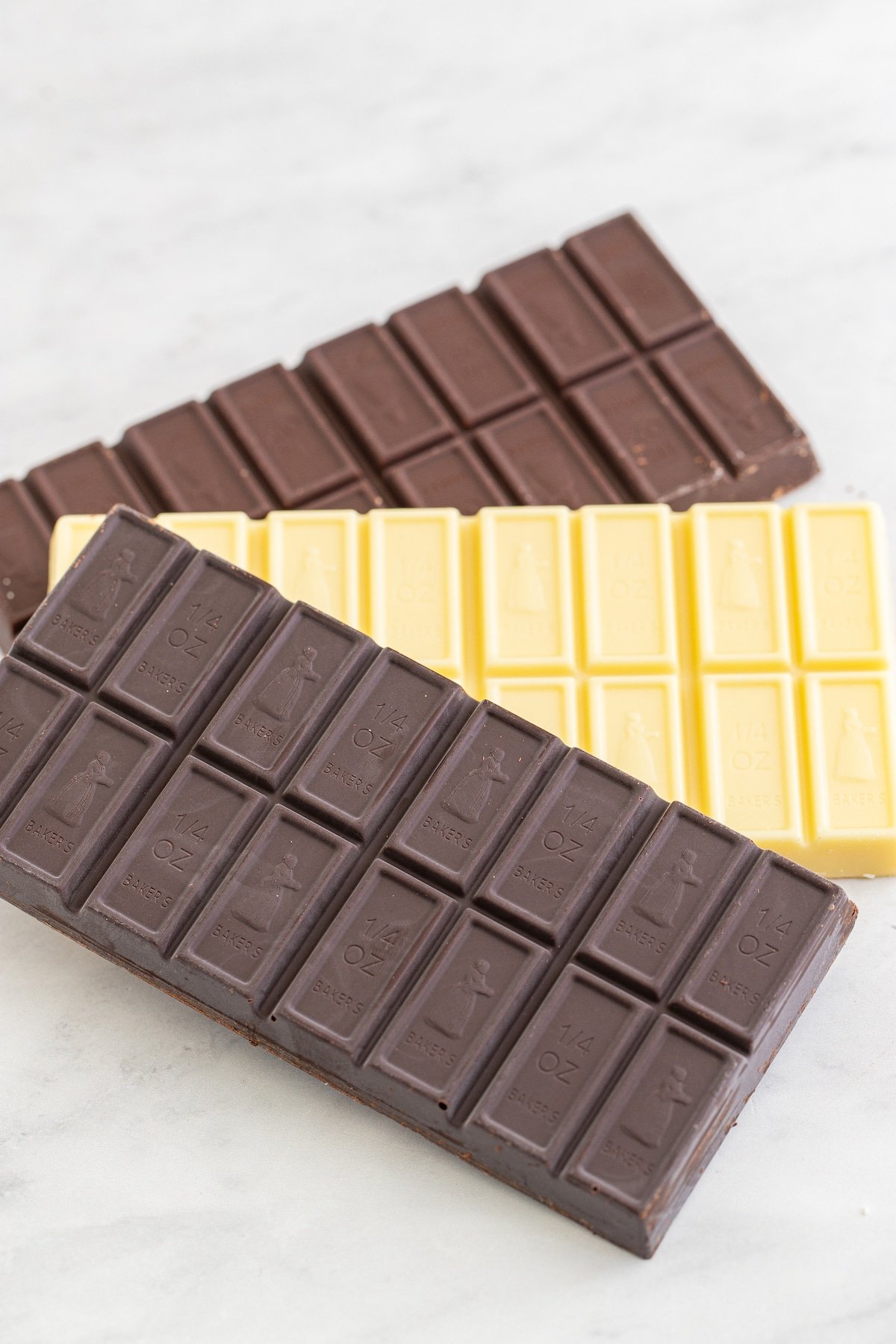
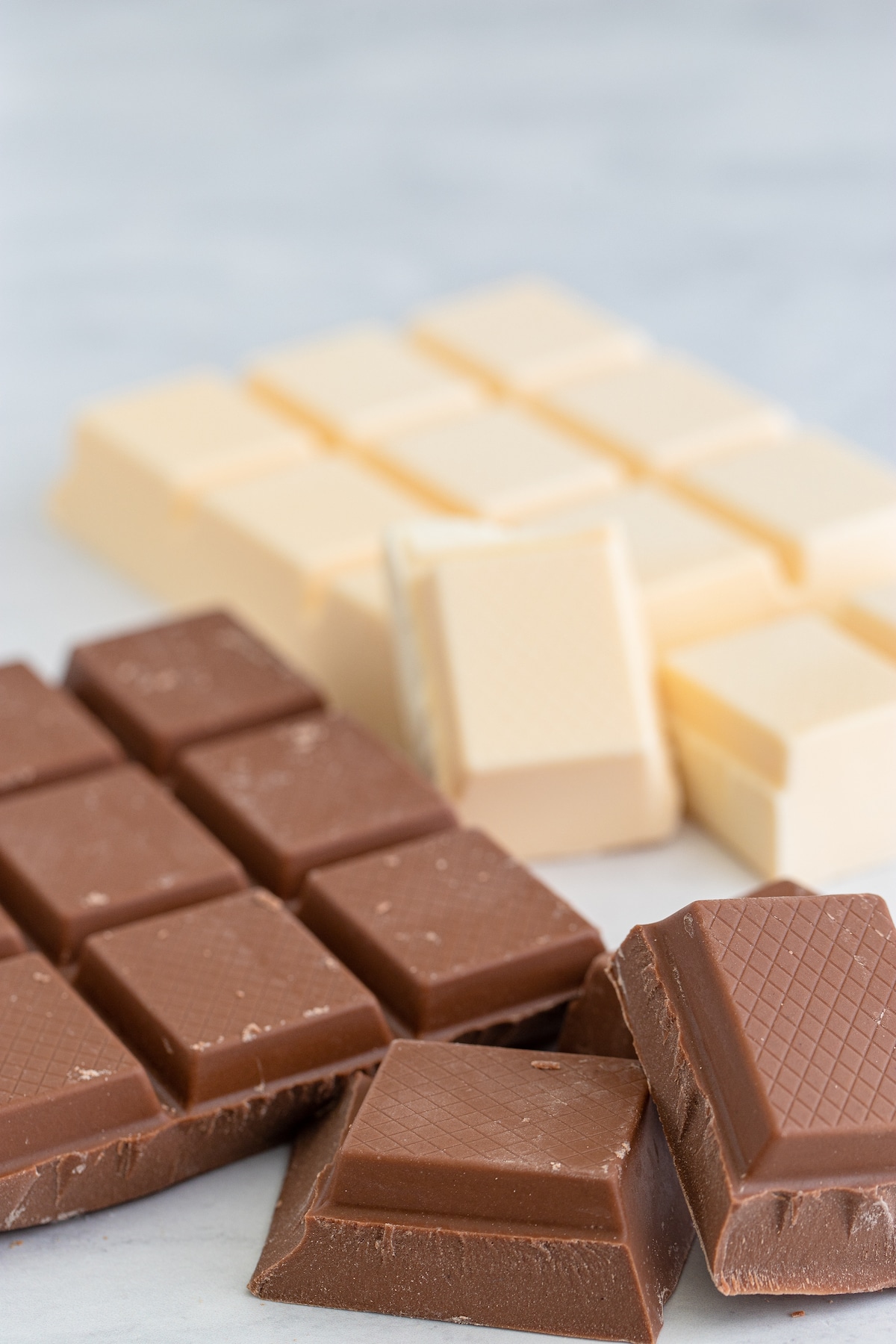
Also called baking squares, baking bars are chocolate you use for baking. They’re usually melted and added to brownies or other recipes. They have a higher percentage of cocoa butter than eating chocolate or chips. This higher fat content provides the melt-in-your-mouth quality and a professional sheen that chips cannot replicate.
Baking bars do not contain soy lecithin or other stabilizers found in chocolate chips. This lack of additives allows bars to melt into a fluid, silky consistency. If you try to make a ganache with chips, it will often be thick and goopy because the chips are engineered to resist melting.
You’ll find baking bars in the baking aisle of the grocery store, usually on the top shelf. They come in Unsweetened, Semi-Sweet, White and often German Chocolate (which I think of as close to milk chocolate). The mainstream brands you’ll find in regular grocery stores are Bakers and Ghiradelli. They’re more of a high-quality chocolate that will taste better in recipes.
How to use Baking Bars
Baking chocolate is great for melting and adding to recipes or chopping and adding in place of chocolate chips. They’re also great for dipping chocolate covered strawberries or shortbread and will give a nice glossy finish when dried.
Baking bars should be roughly chopped into uniform pieces before melting, ensuring even heat distribution and prevents the outer edges from scorching.
Recipes are normally developed using 4-ounce baking bars. Always measure by weight (ounces/grams) rather than volume (measuring cups) as the size of the chopped pieces can change how much fits in a cup.
Chocolate Chips
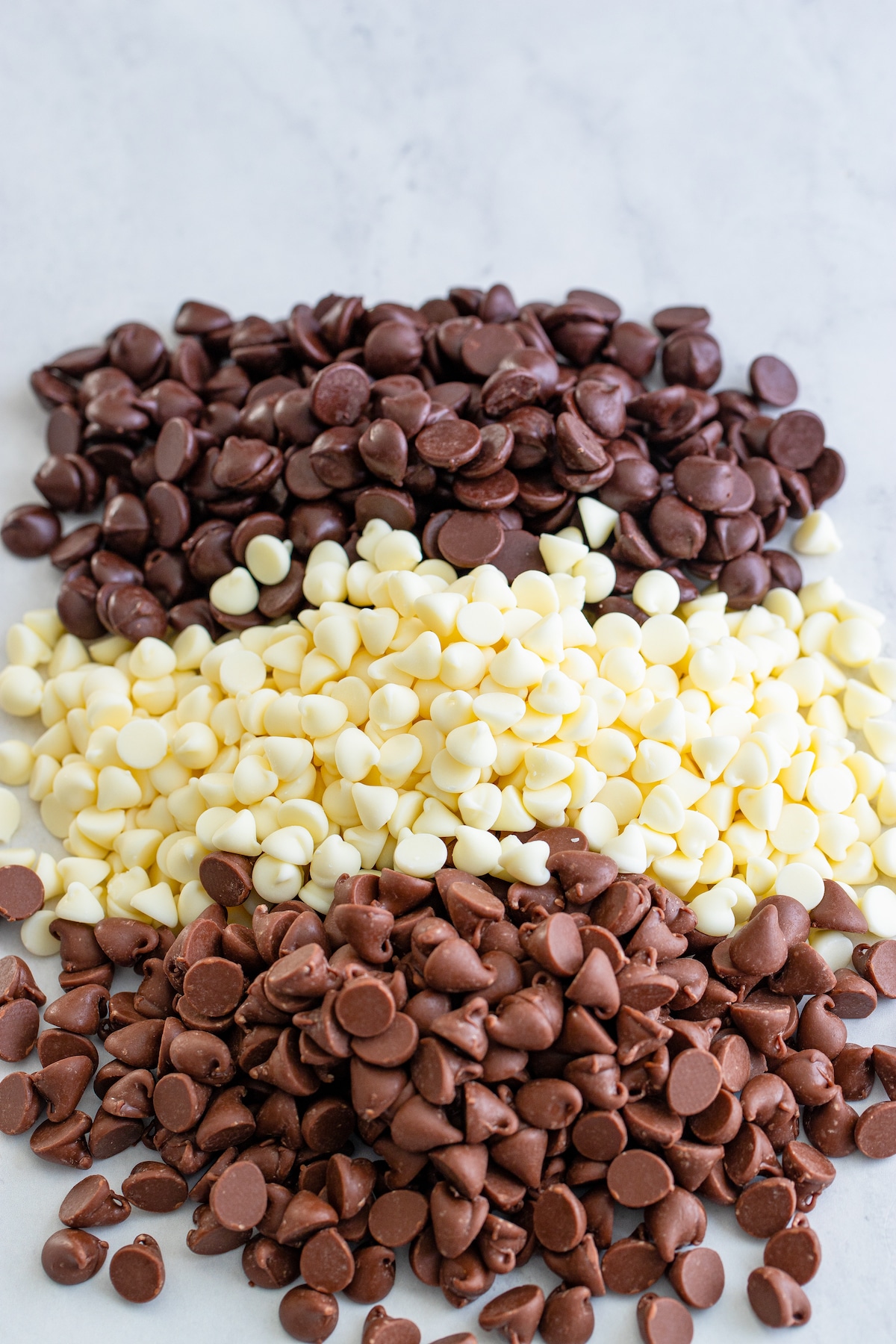
Chocolate chips are the most common form of chocolate. These are sold in the baking aisle and come in lots of different flavors, and they often come as “chunks” instead of chips. I use these in my Best Chocolate Chip Cookie Recipe.
There are too many brands of chocolate chip to list, but I highly recommend buying one of four brands: Ghiradelli, Guittard, Nestle, or Trader Joe’s. I do not recommend store brand chocolate chips – especially if you’re going to melt them.
Chocolate Chips contain soy lecithin, a stabilizer, to keep them from melting completely in the oven – that’s what makes them stay chips – and when they are melted they tend to be a bit cloudy, so they’re not recommended for dipping or bark or things like that.
Melting Wafers/Candy Melts
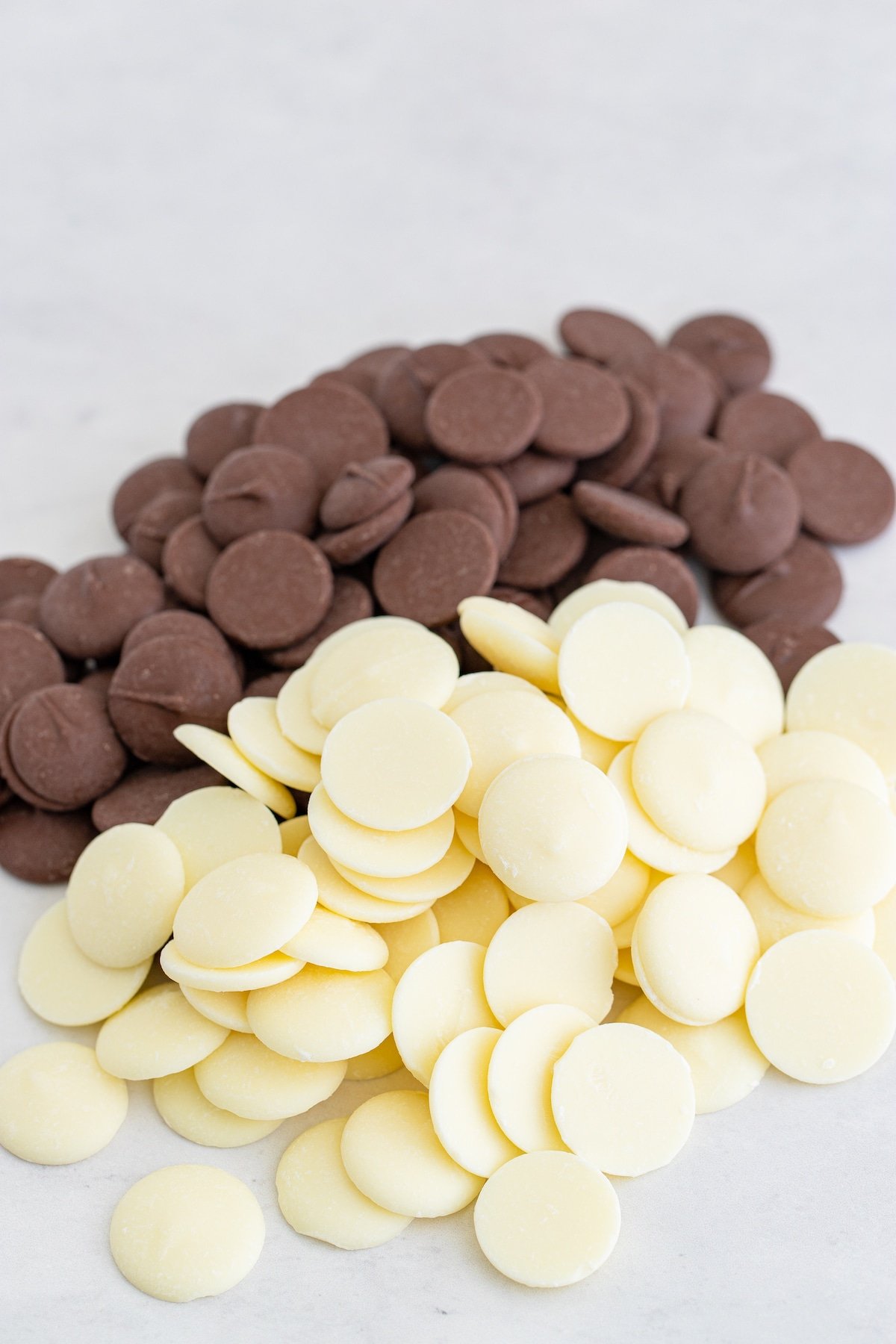
There are two different kinds of melting wafers: chocolate and colorful.
Chocolate Melting Wafers are small disk-like pieces of chocolate that are preferable for melting (over chocolate chips) because they have no stabilizers in them. These are great for dipping truffles and candy or whenever you need to melt chocolate for baking, like when making easy chocolate bark.
Mostly they come in semi-sweet and white chocolate flavor and are sold in the baking aisle of the grocery store where you find the baking bars. The most common melting wafer you’ll find is Ghirardelli brand (or store brands, if you’re shopping at Walmart). They come in pouches or sometimes a contained cup you can melt in.
Do not confuse chocolate melting wafers with the “chocolate” melts you get in the craft aisle or at the craft store (i.e. Wilton brand). While those melts do have a chocolate “flavor” they aren’t chocolate in the sense of the kind you find in the baking aisle.
Chocolate melts are more often colorful and perfect for making candy or truffles when you want that colorful exterior – but the flavor isn’t deep and rich like true chocolate. If you’re making something chocolatey – stick to the kind in the baking aisle.
Almond Bark or Candiquik
Also in the baking aisle are large blocks of chocolate that are engineered for melting and dipping, often referred to as almond bark.
Almond Bark isn’t a thing – it’s a brand. Same with Candiquik – these are brands of melting chocolate. These products are perfect for dipping truffles and pretzels, etc., because they melt smooth and without issue. These blocks are on par with the melts described above, but just a different shape. You’ll also see store brands of this as well. All of them live on that top shelf, alongside the melts and bars.
Of all the block melting chocolate like these, Candiquik is the best tasting, Almond Bark second. Don’t even bother with the store brand! Candiquik also comes in a handy tray you can use for melting.
Cocoa Powder
Cocoa powder is made from chocolate liquor, ground into a fine powder. There is no sugar in it and it comes in a few different strengths: Unsweetened natural cocoa powder, Dutch Process cocoa powder, and Black cocoa. Learn all about cocoa in that specialized post.
What Does the Percentage on Chocolate Mean?
The percent of chocolate indicated the total weight of the bar that comes from cocoa beans, including cocoa mass, cocoa butter, and cocoa powder. A higher percentage means more cacao and less sugar, which results in a more intense, bitter flavor. A lower percentage indicates a milder, sweeter bar.
SAVE THIS RECIPE
| Type | Cacao % | Best Use Case | Sweetness Level |
| Unsweetened | 100% | Brownies, heavy chocolate cakes | Zero Sweetness |
| Bittersweet | 60%–70% | Ganache, sophisticated cookies | Low Sweetness |
| Semi-Sweet | 50%–60% | Classic cookies, muffins | Balanced |
| Milk Chocolate | 10%–40% | Kid-friendly treats, drizzling | High Sweetness |
| White Chocolate | 20% (Cocoa Butter) | Fruit-based desserts, mousses | Very High |
What is Bloom and How to Fix It
You may notice sometimes that your chocolate (bars or chips) has a whitish or greyish film on the outside. This is a harmless coating on the surface of the chocolate which is caused by fat (cocoa butter) or sugar separating due to temperature fluctuations, humidity, or improper temepering. It’s perfectly safe and does not mean your chocolate is spoiled.
To fix bloomed chocolate, melt the chocolate down using a double boiler or microwave for baking, or re-temper it to restore a glossy finish. Basically, if you’re using baking chocolate for a recipe like ganache or brownies, just use it as is even with the bloom. It’ll be just fine!
How to Store Chocolate
Properly storing chocolate is the best way to preserve it’s tecture, snap, and flavor. Chocolate is sensitive to temperature, moisture, and odors, so how you store chocolate is important.
- Chocolate is happiest in a consistent environment between 60°F and 70°F with a relative humidity of less than 50%. Avoid heat and avoid humidity; store chocolate in a cool (but not cold) dry place. Both heat and humidity can result in bloom.
- Chocolate is highly porous and will absorb odors and surrounding scents. Once a baking bar or bag of chocolate chips is open, store in an airtight container or plastic bag.
- Do not store chocolate in the refrigerator unless necessary. The cold is a hostile environment because of the high humidity and chill. When you take cold chocolate out of the fridge you risk moisture from condensation to form, causing it to seize if you try to melt it.
- Avoid exposure to light and air, which causes oxidation. This can cause bloom or even to cause the fats in the chocolate to go rancid over time. Store in a dark pantry away from windows and heat, and store in an airtight container once open.
- If stored properly, in a cool, dry, dark place, dark chocolate can last up to 2 years, milk chocolate up to 1 year, and white chocolate up to 6-8 months.
- If you are using baking bars, do not chop them until ready to use them. Keeping the bar intact preserves the surface area and protects the interior from oxidation and moisture, ensuring a better melt and cleaner flavor.
FAQs
Use what the recipe calls for. If it calls for baking chocolate, that means the baking bars you get in the baking aisle. Use either Ghiradelli or Baker’s brand, they taste the best.
It depends on the recipe you’re using. Some recipes call for unsweetened chocolate and you wouldn’t want to use semi-sweet or the recipe might end up being too sweet. Some recipes call for chocolate melts for ease of dipping – just be sure to use what the recipe calls for.
Not Hershey bars or candy bars, I don’t recommend those. Baking bars are a special kind of chocolate that’s been tempered for melting and comes in different cocoa amounts.
Bittersweet usually has a higher cacao percentage (60%+) and less sugar than semi-sweet (usually 50-60%), resulting in a more intense chocolate flavor.
You can, but it is 100% cacao with zero sugar. It will be extremely bitter and dry on your tongue.
This is called “bloom.” It happens when the fat or sugar migrates to the surface due to temperature changes. It is still safe to eat and bake with.
If a drop of water gets in, stir in a teaspoon of boiling water or a neutral oil (like vegetable oil) one at a time until it smooths back out.

This article was very helpful! I like to make ganache for coating cakes and am trying to do it in a more economical way. We have a bulk food store that has melting chocolate wafers at a really decent price. Will that work the same as a bar chocolate to make a ganache? I’m not 100% sure I understand the difference if the bars and the wafers are both semi-sweet or bittersweet, etc. I get that I can’t use chips but are bars and wafers/melting chocolate interchangeable?? Thanks for your wisdom!
No – melting chocolate wafers are more waxy and made for melting to dip (like truffles). Different brands taste different (Ghirardelli is the best I’ve found) but they’re not as good of a chocolate as a baking bar, so for ganache, I’d use the bars.
this was so helpful! Which type of chocolate do you think is best for something like the popular hot cocoa bombs everyone is making now? or if we make hot cocoa cubes attached to a stirring stick to put into hot milk? type and brand preference? thank you!
For those I’d use melts – Ghiradelli is my favorite (they sell bags of them at the grocery store now, in milk/dark/white) – but Candiquik is my second favorite. https://www.crazyforcrust.com/how-to-make-hot-chocolate-bombs/
Ma’am, l like your recipes. Do you have a newsletter? l want to sign up to it. So please let me know about it. Thanks.
Featured In