
This post may contain affiliate links. For more information, read my disclosure policy.
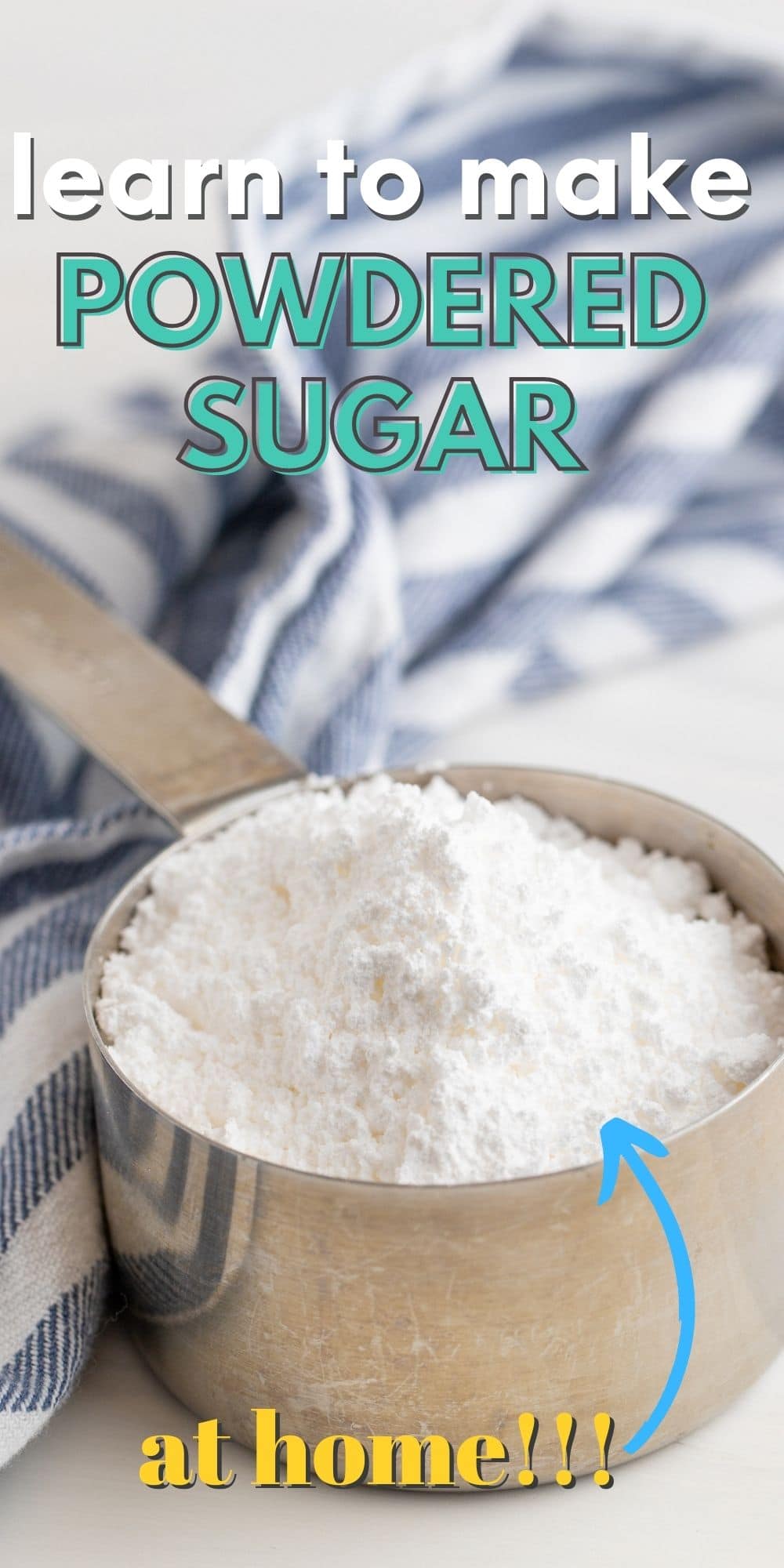
Ever started a recipe for buttercream only to realize you’re completely out of powdered sugar? Don’t panic! Learning how to make powdered sugar at home is a life-saving kitchen hack that only takes two ingredients and five minutes. This DIY version is just as fluffy and effective as the store-bought kind. Whether you need it for a simple glaze or a decadent frosting, I’ll show you exactly how to get that perfect, silky texture every time.
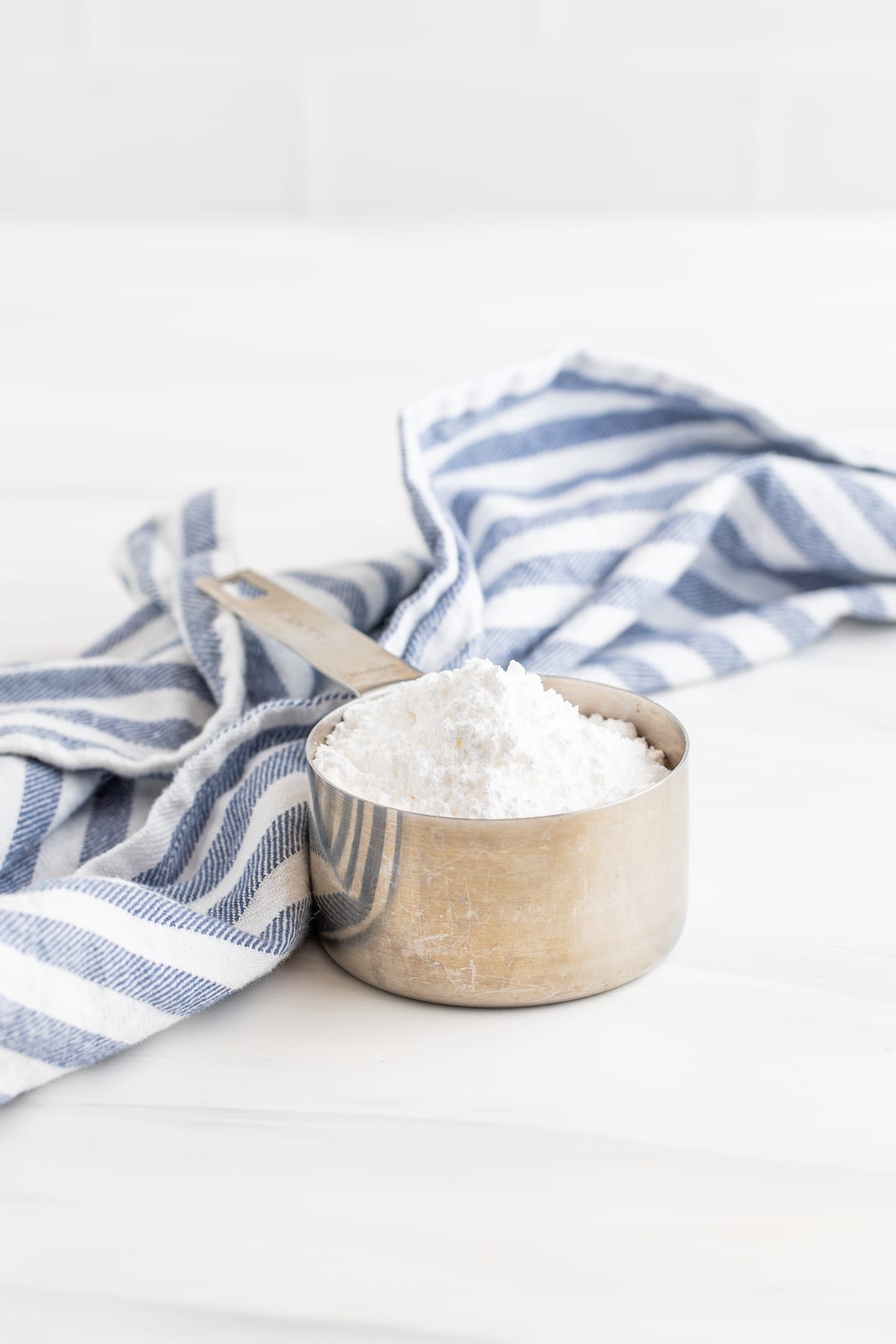
Table of Contents
What Is Powdered Sugar
Powdered sugar (also known as confectioners’ sugar or 10x sugar) is simply granulated sugar that has been pulverized into a fine powder and mixed with a small amount of cornstarch. While it starts as regular sugar, it behaves very differently in your oven. Granulated sugar creates air and crispiness in baked goods, while powdered sugar is the key to creating softer, denser textures. Understanding this difference is the secret to perfecting everything from shortbread to lemon bread icing.
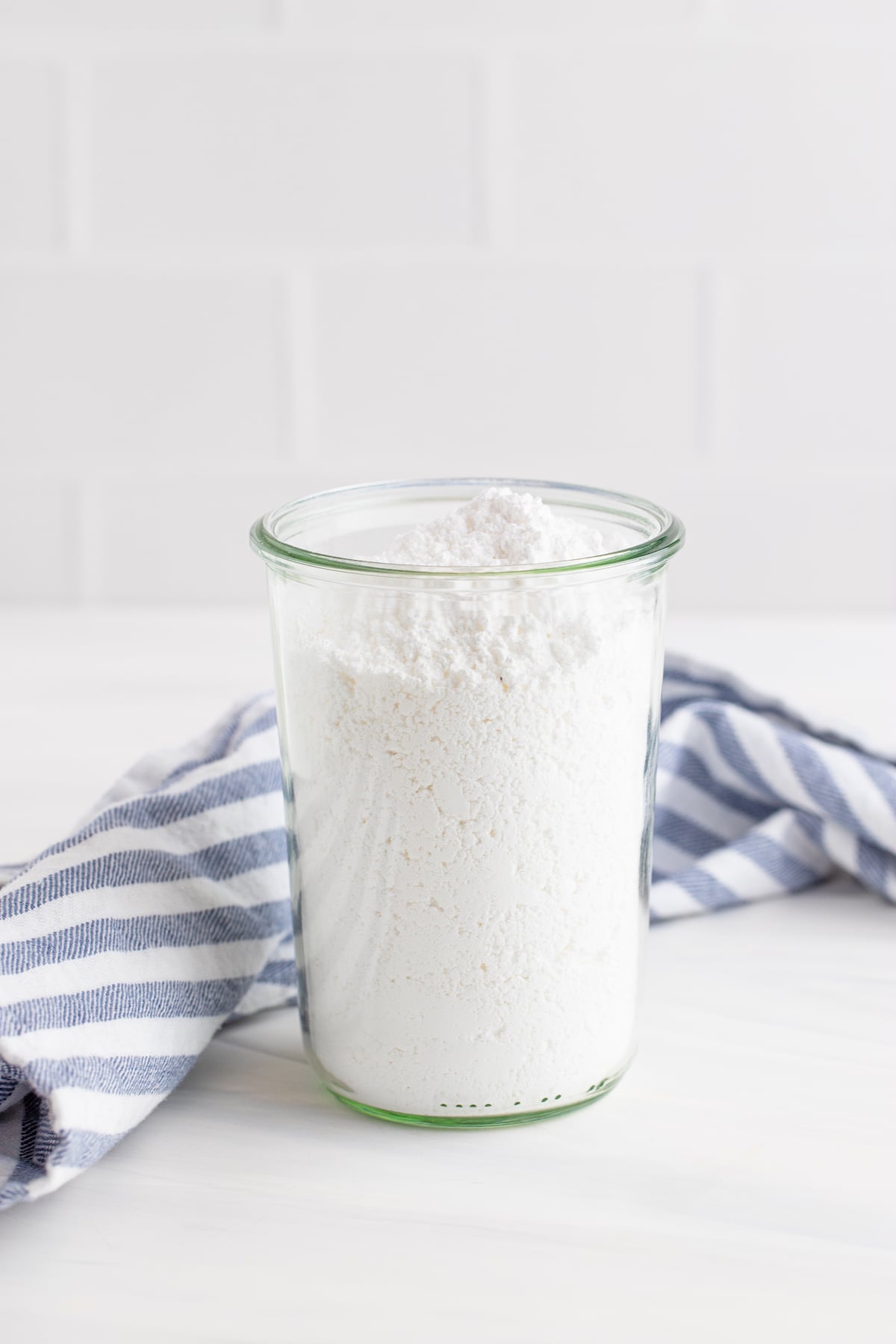
Homemade powdered sugar is a 5-minute substitute made by processing 1 cup of granulated sugar with 1 tablespoon of cornstarch in a high-powered blender. This mixture creates a light, fluffy sugar perfect for glazes, vanilla buttercream, and dusting over desserts.
How to Make Powdered Sugar
- This is a 2 ingredient recipe that uses granulated sugar and cornstarch.
- When making powdered sugar from scratch, adding 1 tablespoon of cornstarch for every 1 cup of granulated sugar is vital. Cornstarch acts as an anti-caking agent, absorbing moisture and preventing the fine particles from clumping together into a solid mass.
- To achieve the 10x fineness required for professional glazes, a high-powered blender (like a Vitamix or Ninja) is superior to a standard food processor. A standard processor often leaves behind microscopic granules that can result in a gritty texture in your buttercream or cream cheese frosting.
- Even if you use a high-powered blender, homemade powdered sugar can sometimes retain microscopic granules of granulated sugar. While these tiny crystals won’t be noticed in a baked cookie dough, they can cause a gritty or sandy mouthfeel in delicate glazes or vanilla buttercream.
- For the best results, always pass your DIY sugar through a fine-mesh sieve before measuring it for a frosting or glaze. This not only removes potential lumps but also aerates the sugar, ensuring it dissolves instantly into your liquid ingredients for a perfectly smooth, professional finish.
- Always measure your homemade powdered sugar after blending. Because the blending process incorporates so much air and changes the volume, one cup of granulated sugar will yield significantly more than one cup of powdered sugar.
How to make Powdered Sugar Recipe
Ingredients
- 1 cup (200g) granulated sugar
- 1 tablespoon cornstarch
Instructions
- Add both sugar and cornstarch to a high powered blender and process until powdery. Measure before using according to recipe.
Recipe Nutrition
Granulated vs Powdered Sugar Comparison Table
| Feature | Granulated Sugar | Powdered (Confectioners’) Sugar |
| Structure | Large, jagged crystals. | Fine, pulverized powder with cornstarch. |
| Cookie Texture | Airy & Crispy: Creates tiny air pockets during creaming and promotes crisp edges. | Soft & Dense: Results in a tender, melt-in-your-mouth crumb with no crispiness. |
| Cookie Spread | High: Melting crystals encourage the dough to spread and thin out in the oven. | Low: The starch and fine particles help the dough hold its shape with minimal spreading. |
| Best Used For | Traditional Chocolate Chip Cookies or Sugar Cookies. | Shortbread, Mexican Wedding Cookies, or Whipped Shortbread. |
FAQ
Yep, they are the same thing. It’s also called icing sugar. I think it depends on where you’re from, but whether it’s called confectioner’s sugar or icing sugar, it’s all the same.
A box of powdered sugar is usually one pound which is approximately 3 ½ cups.
You should measure it the same way you do flour – with the spoon and level method.
You can make your own confectioners’ sugar with granulated sugar and cornstarch. This is a great hack when you need some for a recipe but don’t have any on hand.
Usually a box is 1 pound, and will yield about 3 1/2 cups.
Generally, no. Powdered sugar will make your cookies much softer and denser, whereas granulated sugar provides the necessary air and crisp edges.
This is usually due to the blender speed. Make sure to use high speed and process until it is completely light and fluffy.
While cornstarch is best for preventing clumping, you can omit it if you plan to use the sugar immediately for a glaze.

Very good and quick and easy
Thank you for your simple but important lesson on powdered sugar! I learned a lot.
Featured In
Rate This Recipe
Recipe Ratings without Comment