This post may contain affiliate links. For more information, read my disclosure policy.
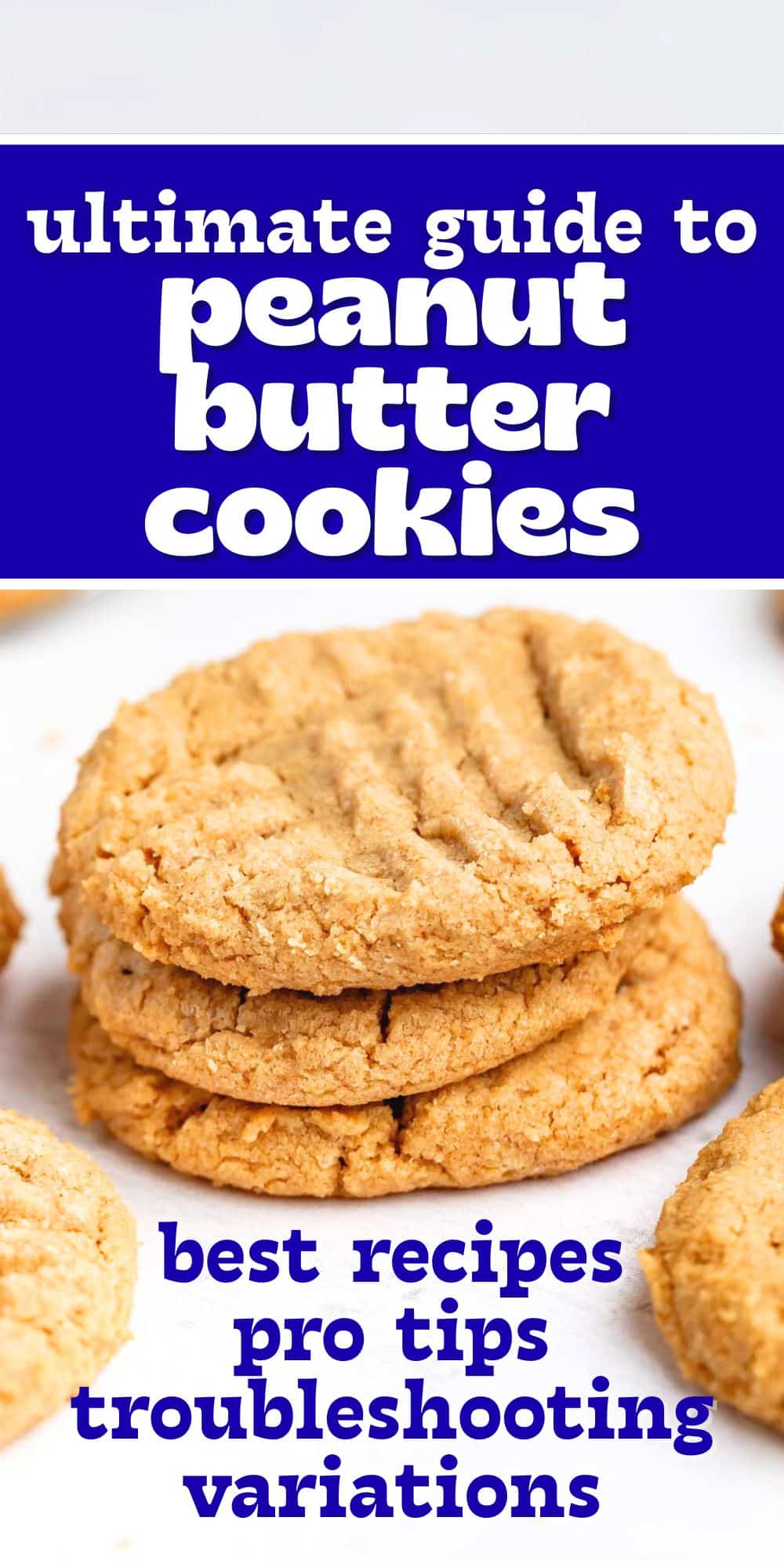
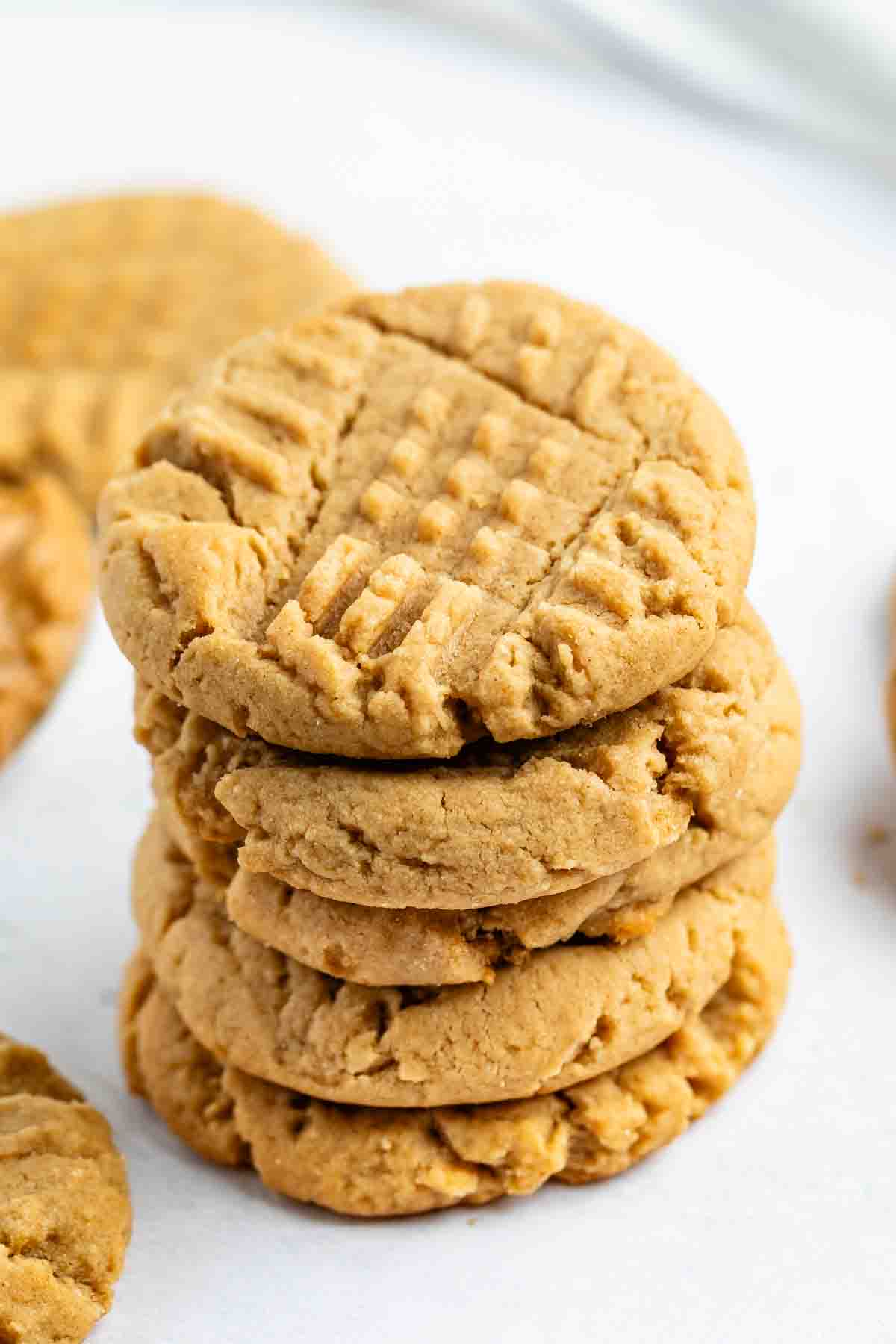
If you love peanut butter cookies you’re in the right place! We make peanut butter cookies so often and I have over 40 recipes on this site – I’ve been making these cookies for over 20 years and have become the expert at all things peanut butter. This is the Ultimate Peanut Butter Cookie Guide where I’m going to explain all about the types of peanut butter, ingredients, different methods, how to store and freeze cookie dough and share some of my favorite recipes.
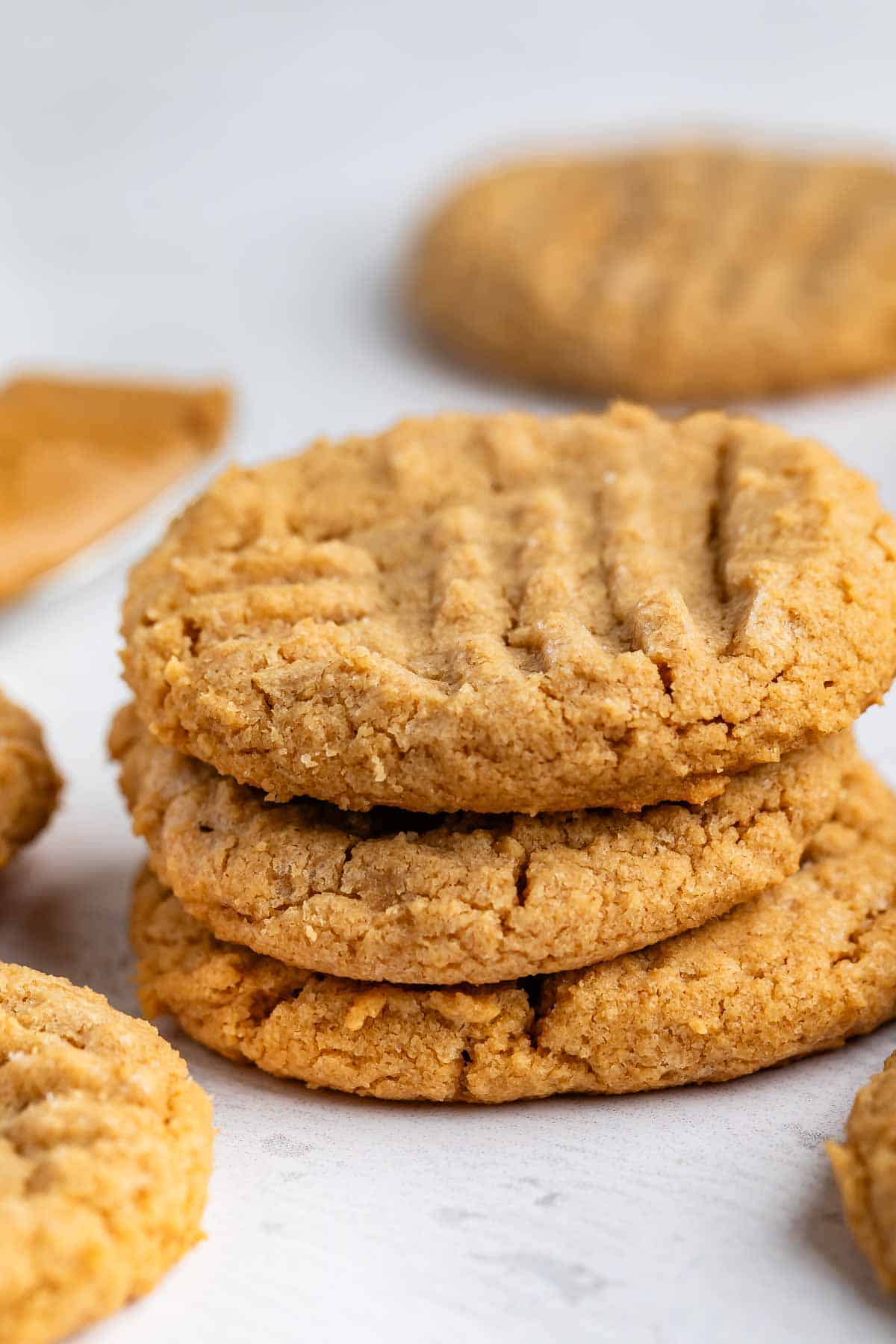
Peanut butter cookies are made with peanut butter, sugar, and eggs (with or without flour). The best texture depends on the type of peanut butter used, the sugar ratio, and baking time. Shelf-stable creamy peanut butter creates the most consistent cookies. Peanut butter cookies can be soft, chewy, flourless, or classic criss-cross cookies, and both baked cookies and cookie dough freeze well.
Table of Contents
- What makes a great peanut butter cookie?
- Peanut Butter 101
- Types of Peanut Butter Cookies
- Peanut Butter Cookie Ingredients Explained
- Add-Ins & Flavor Boosters
- How to make Peanut Butter Cookies
- Storing & Freezing Peanut Butter Cookies and Dough
- Troubleshooting and FAQ
- Tools and Pan Conversions
- Best Peanut Butter Cookie Recipes
What makes a great peanut butter cookie?
- Make sure you have the proper ratio of butter to peanut butter (too much of each will make a greasy cookie)
- Sugar affects spread and texture – most cookie recipes use approximately double the amount of sugar to butter.
- Using a combination of brown sugar and granulated sugar will give a soft cookie with crisp edges.
- Baking time is super important – don’t over bake cookies or they’ll be dry.
- Texture problems usually come from too much flour, the wrong peanut butter, or overbaking.
Peanut Butter 101
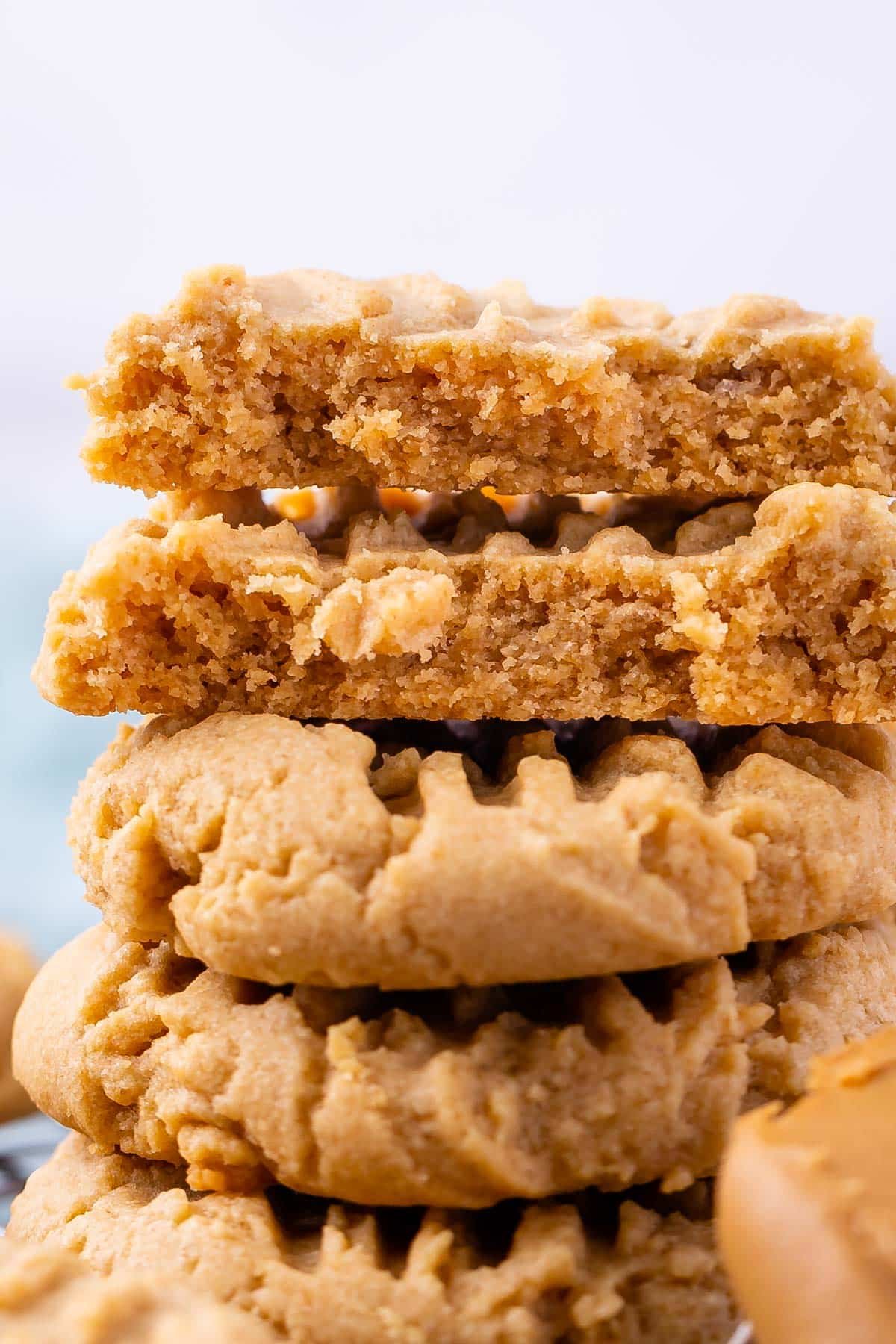
Which peanut butter is the best kind to use for baking? There are lots of different kinds out there and it can be important to use the right kind for different recipes.
If a recipe does not specify natural peanut butter, use shelf-stable creamy peanut butter.
- All of the recipes on my site have been tested with regular shelf-stable (no-stir) peanut butters – mainstream brands like Skippy or Jif. Unless otherwise specified you can use any brand of stabilized peanut butter (even Skippy Naturals or Jif Naturals) that don’t need to be stirred.
- My recipes are usually tested with Skippy Naturals Peanut Butter, which has less added sugar than regular. I have not noticed a huge difference when using sweetened peanut butter, but if you make a recipe and notice it’s too sweet or not sweet enough, that could be a reason.
- Natural peanut butter is more oily and needs to be stirred; this kind of peanut butter doesn’t always work in recipes (because of the extra oil it may need more flour and/or change the texture of the recipe), so be sure to note what a recipe calls for before baking.
- Creamy vs Crunchy Peanut Butter: 99% of the time either one of these can be used. I have never personally made something that couldn’t be made with either one, as long as it’s shelf stable. It shouldn’t change the outcome of a recipe except you’ll see the crunchy bits in your final product.
- Substitution nut butters: For the most part you can swap any nut butter or sunflower butter for peanut butter in recipes as long as it’s shelf stable. If it’s a natural nut butter you may need to adjust the recipe for the extra oil. And on that note – peanut butter powder is a great flavor booster but it is not a 1:1 replacement for peanut butter. You cannot make traditional peanut butter cookie recipes with PB2.
Types of Peanut Butter Cookies
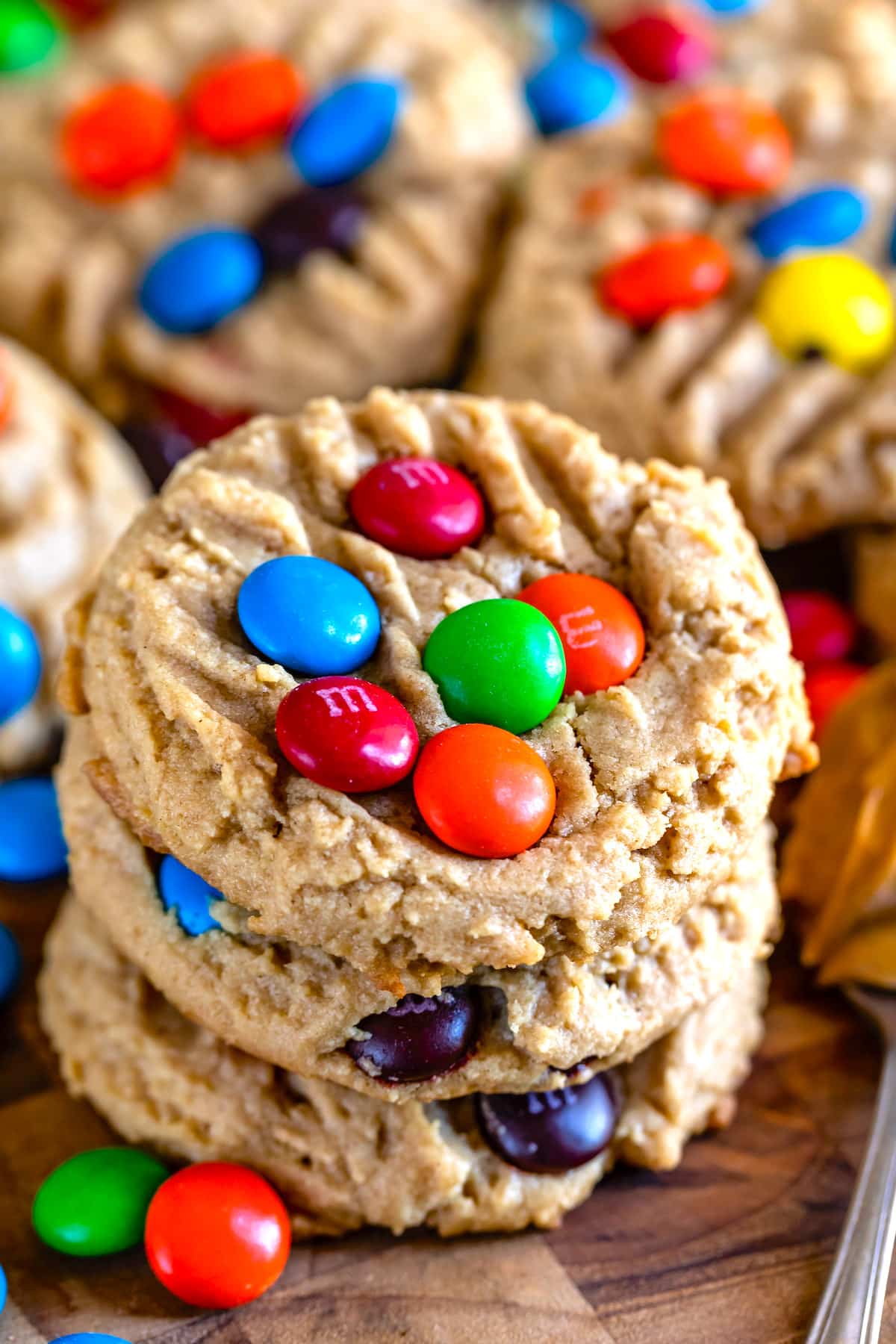
- Classic Peanut Butter Cookies have crisp edges and soft centers.
- 3 ingredient peanut butter cookies are easy to make and also gluten-free.
- Peanut Butter Cookie Variations can include blossom cookies with Kisses, stuffed peanut butter cookies, or even peanut butter cookie bars or peanut butter cookie cake.
- See the bottom of this guide for even more ideas!
Peanut Butter Cookie Ingredients Explained
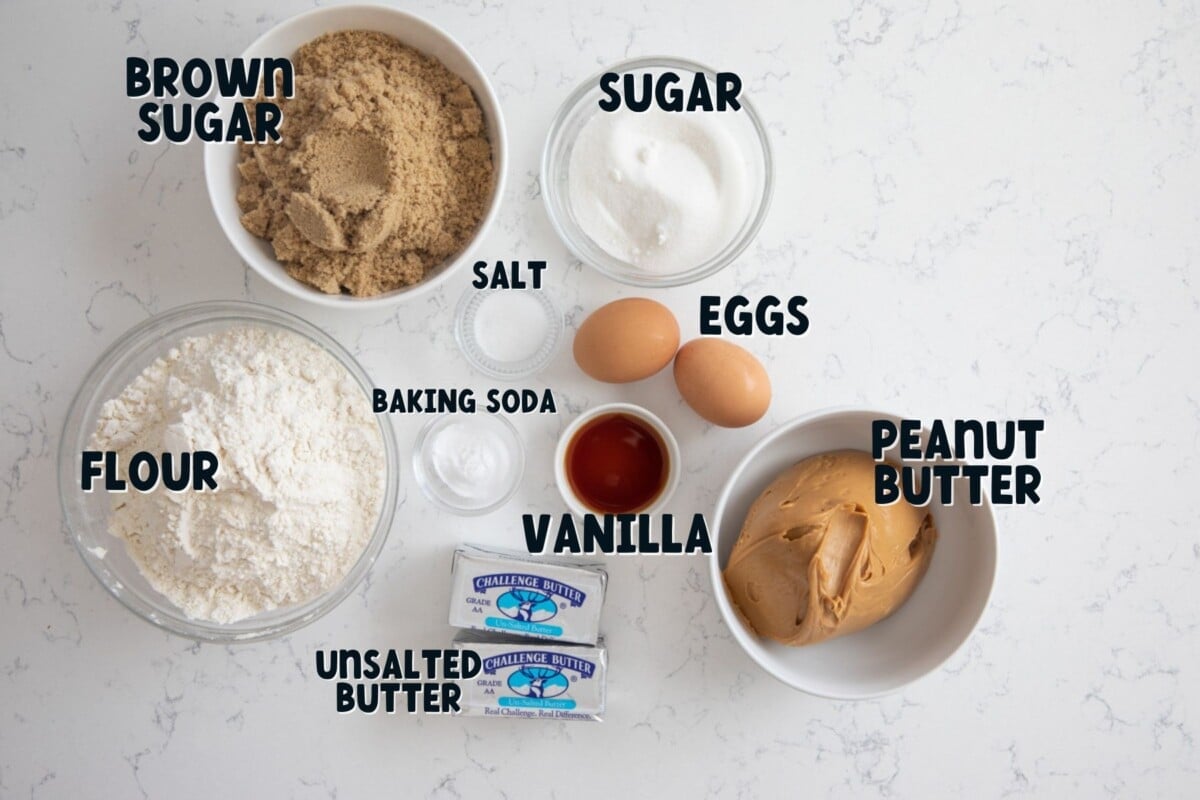
Besides peanut butter, cookies need other ingredients to flatten properly and turn out delicious:
SAVE THIS RECIPE
- Fats: traditionally this is butter (either salted or unsalted; reduce added salt by 1/4 teaspoon if using salted butter in place of unsalted). Sometimes butter will just need to be softened but other times it will call for being melted. Follow the recipe you’re using. In my experience you can substitute Vegan Butter Sticks or Butter Flavored Crisco in place of butter pretty easily to make cookies dairy-free.
- Sugars: cookies traditionally have a combination of brown sugar (which must be packed) and granulated sugar. Often times you can substitute a sweetener instead (like Swerve) but using a sugar substitute will change the texture and outcome and may need some other swaps. Sugar helps with spread as well as sweetness so it’s important to follow the recipe.
- Eggs: Cookies need the fat of an egg yolk for richness and the white for stability. Adding an extra yolk won’t change the recipe much but it will add a bit of extra chew to your cookie.
- Leaveners: Baking soda is a typical cookie ingredient which helps make the cookies spread. Baking powder helps the cookies lift – if using powder it will m make the cookies more cakey.
- Flour: All-purpose flour is just fine for peanut butter cookies. Make sure to spoon and level it – don’t pack the measuring cup. Even better: use a kitchen scale and measure using grams for the most accurate baking.
- Milk: This is always my secret ingredient for soft peanut butter cookies. Any kind of milk can be used (nonfat, 2%, whole, or nondairy). The recipe will work without this addition but it keeps them nice and soft.
How to make Peanut Butter Cookies
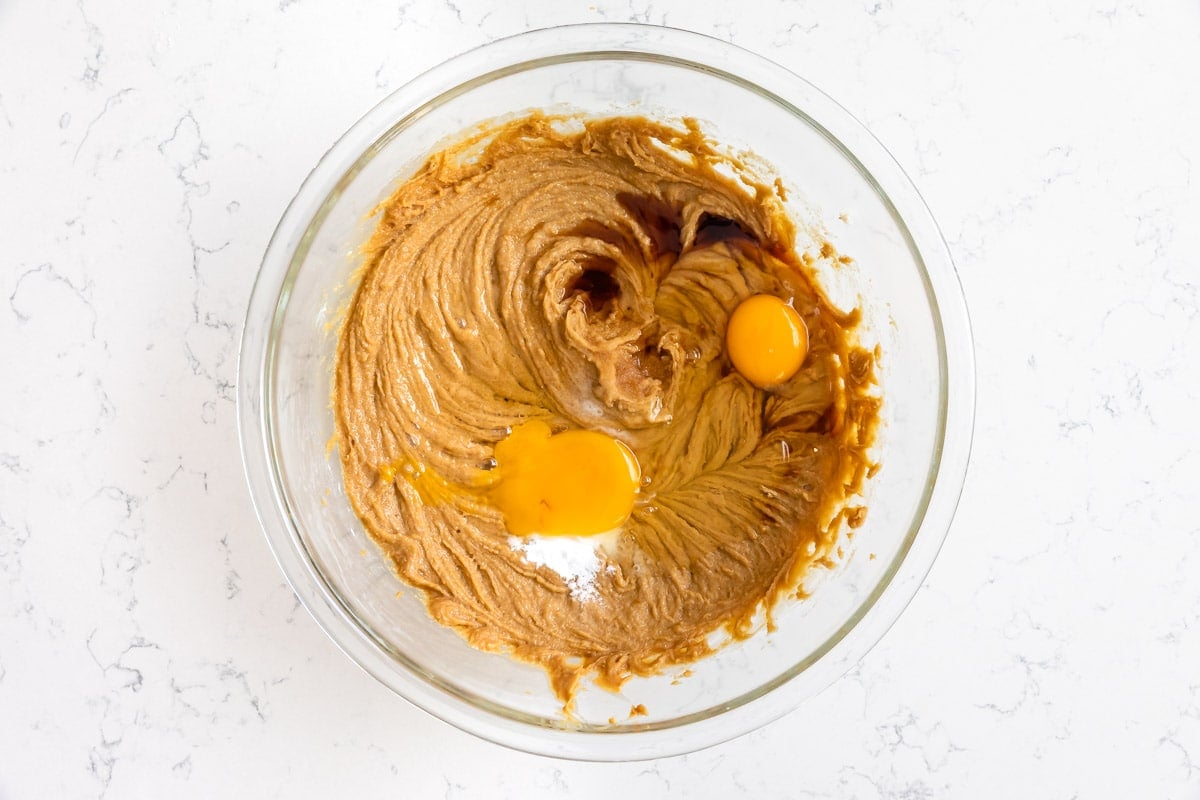
- Mixing Order: whisk together dry ingredients (flour, salt, baking soda) first. Cream together your butter with peanut butter and sugars before adding eggs, extracts, and the dry ingredients. It’s always important not to over mix cookie dough.
- Chilling: Always defer to the recipe when chilling cookie dough. Peanut Butter Cookies made with softened butter typically do not need to be chilled, however melted butter cookies might require it. Usually a 30-60 minute chill time is enough, but again, defer to the recipe instructions.
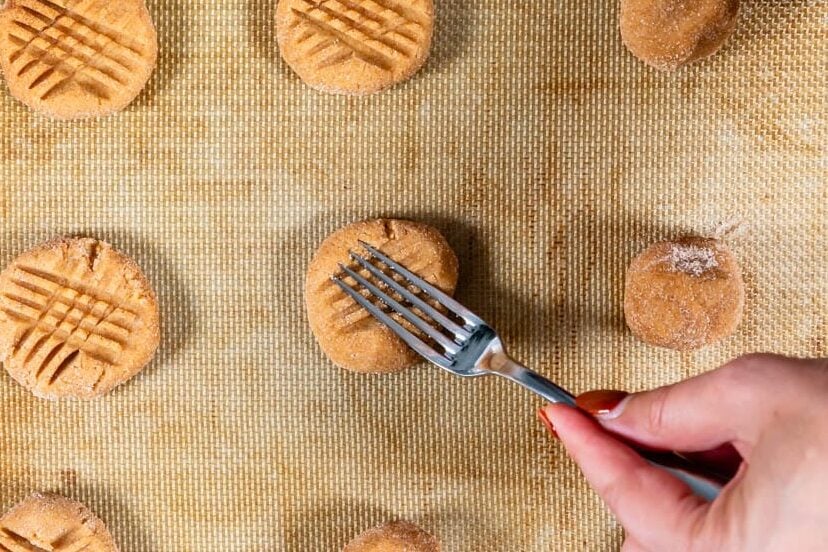
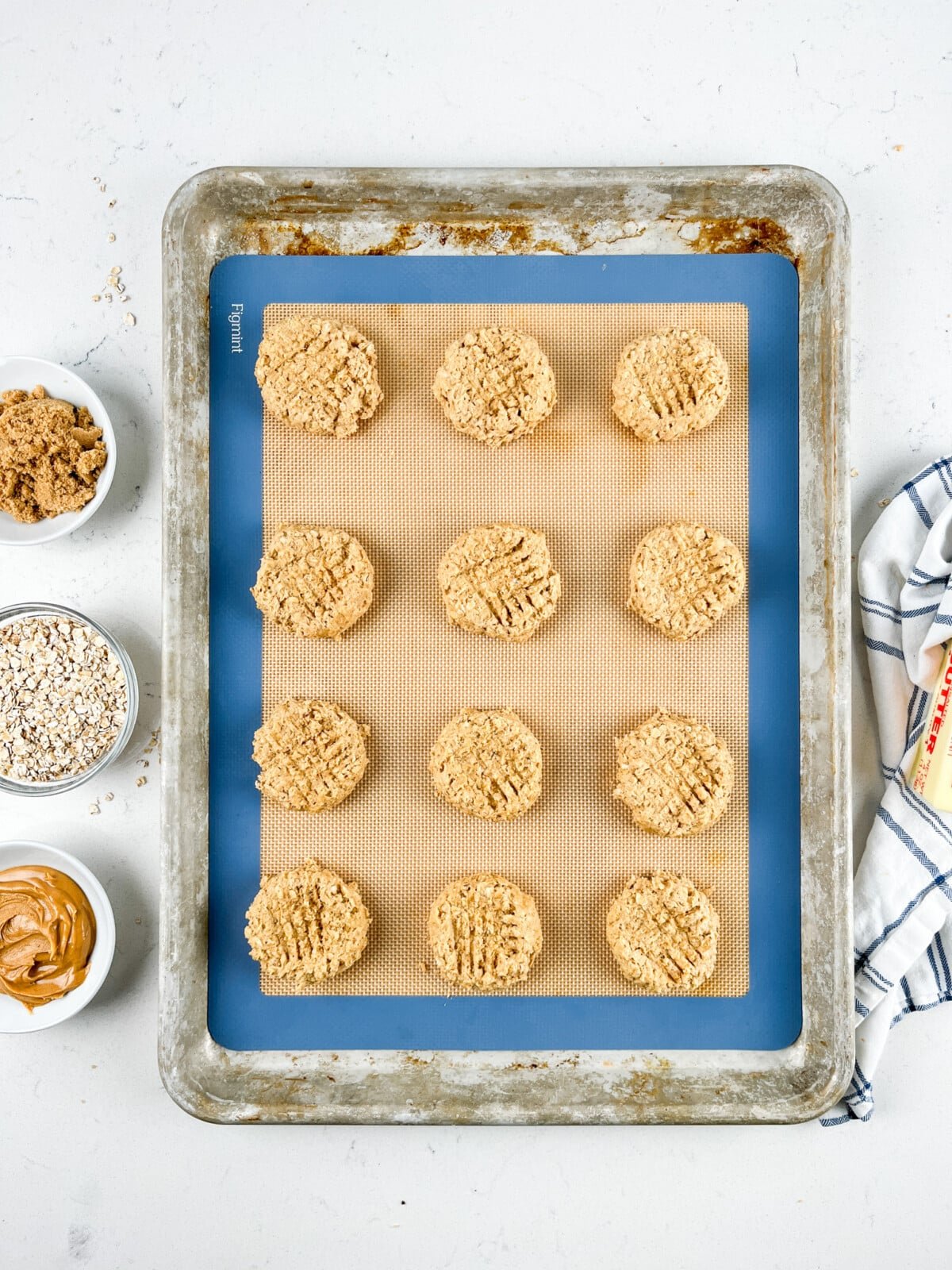
- Shaping: Because peanut butter doesn’t have the same chemical makeup as butter, using it in cookie dough causes the cookies to not spread much. (Ever wondered why blossom cookies are so puffy? It’s because peanut butter cookies don’t spread.) This is why it’s so important to do criss-cross fork marks on peanut butter cookie dough. Otherwise your cookies will stay in little balls, burn on the edges and be raw in the center.
- How to know when peanut butter cookies are done baking: They’ll be light golden around the edges and on the bottom and no longer look glossy. They’ll be slightly puffed as well.
| Scoop (Tbsp) | Bake time @ 350°F | Texture Notes |
|---|---|---|
| 1 tablespoon | 8-9 minutes | Perfect for blossom cookies |
| 2 tablespoons | 10-14 minutes | Classic PB Cookie |
| 3 tablespoons | 13-16 minutes | Giant cookies, thicker and softer in the center |
Troubleshooting and FAQ
Make sure you measured your flour correctly or are not using natural peanut butter. It’s best to measure your flour using a scale. If your recipe uses melted butter, scoop while the dough is still warm to avoid it hardening and being to crumbly or hard to scoop.
This should not happen with peanut butter cookies unless the incorrect ingredients are used – make sure to read the recipe carefully to make sure you’re not using natural peanut butter or the wrong kind of butter.
Chances are they needed to be baked longer. Add a few minutes to the cook time (not all ovens cook the same way). If your’e making 3 ingredient peanut butter cookies they will fall apart easier because they have less stabilizers.
You probably didn’t cream the mixture enough – make sure to cream for 1-2 minutes until the sugar looks dissolved and the butter is fluffy.
Tools and Pan Conversions
- My essential peanut butter cookie tools: cookie scoops, cookie sheets, kitchen scale, parchment paper, and a fork for criss cross hatch marks. See all my cookie tools here.
- I also love using my sticky peanut butter measuring cup for easy cleaning.
- Most of my recipes can also be baked as cookie bars or cakes. Rule of thumb: if a recipe uses 1/2 cup butter, it can be baked in a 9-inch or 10-inch round or square cake pan. If it calls for 1 cup butter, use a 9×13-inch pan. See all my pan size equivalents.